
Every year, nature lovers celebrate Homes for Birds Week, a time to help birds find safe and cozy homes. A well-designed birdhouse gives birds a place to nest, keeping them safe from bad weather and predators. But not all birdhouses are the same. Here’s what to look for when you’re choosing a birdhouse.

1.Size
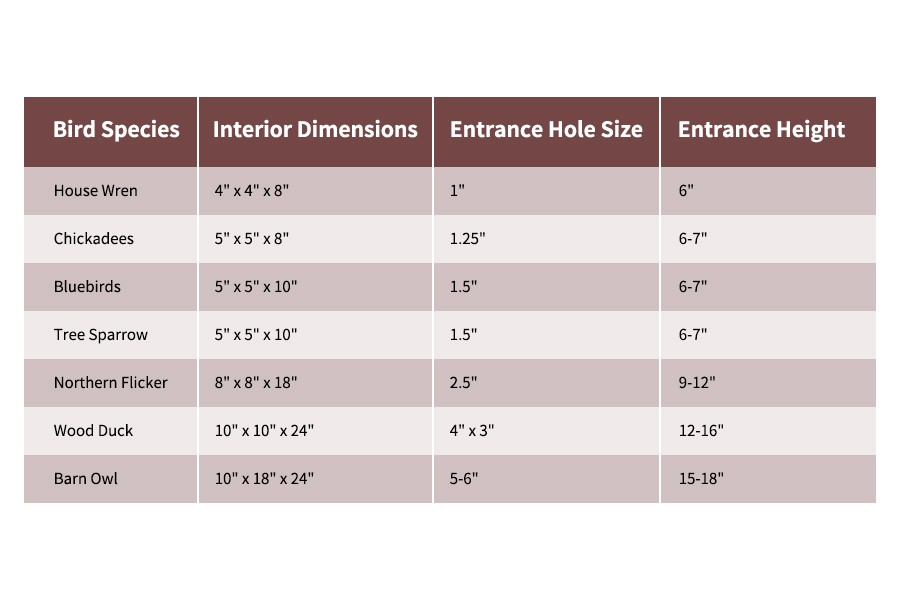
Different birds prefer different house sizes, so choosing the right dimensions is crucial. Here’s what to keep in mind:
- Interior Dimensions: Birds need a home that fits them just right—too big, and predators might sneak in; too small, and they may not use it. For example, bluebirds prefer an interior space of about 4×4 inches, while larger birds like owls or woodpeckers need more space, i.e. 9×9 inches or more.
- Entrance Hole Size: This is crucial! The right hole size ensures that only the intended species can use the birdhouse and keeps larger, more aggressive birds away. Moreover, the height of the entry hole is equally essential: If it’s too low, predators can easily reach inside; if it’s too high, fledglings may struggle to fly out. For example:
- Eastern Bluebirds: 1.5 inches, 6-7 inches from the floor
- Chickadees: 1.25 inches, 6-7 inches from the floor
- House Finches: 2 inches, 4 inches from the floor
- American Kesteral: 3 inches, 9-12 inches from the floor
2.Material
The best material for a birdhouse is untreated wood, such as cedar, cypress or pine. Natural wood provides excellent insulation, keeping the inside warm in winter and cool in summer. It also looks natural and blends easily into the environment. Recycled plastic birdhouses can be durable and eco-friendly, but they must have good ventilation to prevent overheating. Avoid thin plastics that can trap heat or release chemicals. Plus, stay away from metal as they can get dangerously hot in summer.

3.Predator Guards
Animals like raccoons, squirrels and larger birds can attack nests. A metal guard around the entrance hole prevents animals from enlarging it. Some birdhouses also have baffles on the pole to keep predators away. No perches! Yes, you heard me right. Perches might seem cute but they provide easy access for predators or competitive birds. Plus, cavity-nesting birds do not need a perch for landing.

4.Removable Panels
After nesting seasons, old nests can leave behind parasites, bacteria and mold. A removable panel or door makes it easy to clean out old debris and keep the birdhouse safe for new occupants. It also allows you to check inside the birdhouse without disturbing the birds. This is useful if you need to check for unhatched eggs after the nesting season or repair any damage inside the birdhouse. Plus, moisture, debris and waste can rot the wood over time, and cleaning the birdhouse regularly helps it last longer.

5.Sloped vs. Flat Roof
The roof design is more important than you think! Here are two common options:
- Sloped Roof: A sloped roof is designed with an angle so that rainwater or snow can easily run off instead of pooling on top. It also makes it harder for predators liks raccoons and squirrels to sit on top and reach inside. Moreover, overhanging roofs (about 2 inches beyond the entrance hole) help shield the entrance from rain, wind and snow, keeping baby birds warm and dry.
- Flat Roof: Generally not recommended as it collects water, leading to leaks, mold and rotting wood, which makes it wear out quicker. Without proper shading, a flat roof absorbs more heat, making the birdhouse uncomfortably hot in the summer. Worse still, it’s more vulnerable to prevailing winds and rain.

6.Fledgling Kerfs
Baby birds need a little help to get out of the nest. Fledgling kerfs are tiny ridges or grooves inside the birdhouse under the entry hole. These fledgling kerfs, acting as a built-in ladder, help chicks ready to climb out when they’re ready to fly. Grooves should be shallow but close enough for small feet to grip (about 0.25 inches apart). Avoid deep cuts as they might weaken the structure. Or you can select a birdhouse with bark-lined interiors that mimic natural tree cavities.

7.Ventilation and Drainage
Birds need air! Some birdhouses have small vent gaps under an extended roof, which creates airflow while shielding the openings from direct rain. A mesh floor or slightly raised slatted base can elevate the nest to keep it dry and safe from mold. This also helps with parasite control by making it harder for mites and other pests to thrive. Moreover, you can drill 4 small drainage holes in the corners of the floor to let excess moisture drain out.

8.Lighting Conditions
Not all birdhouses need windows – some birds prefer dark, enclosed spaces for nesting. However, a small, well-placed window can make the birdhouse more inviting. Some birds like a bit of natural light inside, but make sure it’s not too big or easy for predators to peek through (too much light can overheat the house and make it less secure). Also, the window should be covered with frosted plastic to protect against bad weather. If you install a nest box camera inside, it can greatly improve the quality of footage.

9.Color
Birds are more likely to use a birdhouse that blends into its surroundings, so natural wood tones or muted colors seem more appealing to birds. If you need to paint the house, use non-toxic, water-based paints to avoid harmful chemicals or fumes that could be detrimental to birds. Opt for light-color paints as they can effectively reflect sunlight and prevent the birdhouse from overheating in warmer areas.

10.Mounting Options
When selecting a birdhouse, it’s important to consider its mounting options to ensure the safety and comfort of the birds.
- Poles or Posts: Metal poles are less vulnerable to predators because they are difficult for animals like raccoons to climb up. Ensure the pole is stable and does not sway in the wind. What’s more, you can add a baffle or an upside-down pot to deter predators like snakes or squirrels.
- Hanging: Hanging birdhouses from tree branches or porch ceilings is not recommended. Birds prefer birdhouses that do not sway as excessive movement can be unsettling, which can jeopardize their breeding success and cause stress.

