
Hedgehogs are one of our most loved garden visitors, known for their shy nature and winter hibernation. Normally, they sleep through the coldest months to conserve energy when food is scarce. But in recent years, more people are spotting hedgehogs waking up early from hibernation, sometimes as early as January or February.
So why does it happen, and should we be worried?
Why Do Hedgehogs Hibernate?
Hedgehogs hibernate to survive winter when insects, worms and beetles are hard to find. During hibernation:
- Their heart rate and breathing slow dramatically
- Body temperature drops
- They rely entirely on stored fat reserves
Hibernation usually lasts from late autumn until March or April, but warmer winters and mild nights can cause them to wake up early.

Why Do They Wake Up Early?
Early waking isn’t always a problem, but it can be risky. Here are the most common reasons it happens:
1.Warmer Winters
Milder temperatures can confuse a hedgehog’s natural rhythm. If nights stay warm for several days, hedgehogs may wake up thinking spring has arrived, only to find little food available.
2.Nest Disturbance
Hibernation nests can be disturbed by garden work, pets, flooding or strong winds. If their nest becomes cold, wet or unsafe, hedgehogs may wake and move elsewhere.
3.Insufficient Fat Reserves
Young and underweight hedgehogs may wake early because they run out of energy. This is one of the most dangerous scenarios, as they might not have enough strength to find food.
4.Natural Wake-Ups
It’s normal for hedgehogs to briefly wake up during hibernation to change nesting spots, drink water and adjust body position. Most of the time, they settle back into sleep without issue.

Is It Dangerous for Hedgehogs to Wake Early?
Sometimes yes, sometimes no. A healthy hedgehog that wakes briefly on a mild night and returns to hibernation is usually fine. However, early waking becomes dangerous when:
- Temperatures drop again suddenly
- Food is unavailable
- The hedgehog is thin, weak, injured or active during daylight
Each wake-up burns precious energy, and repeated waking can be fatal, leading to exhaustion, hypothermia and starvation. If they cannot refuel that energy, they may quickly become weak. This is why early sightings should never be ignored. While not every awake hedgehog is in danger, careful observation and timely support can make a crucial difference in helping them survive the winter.
What to Do If You See an Awake Hedgehog?
1.Check the Time & Temperature
If it’s daytime or below 5°C (41°F), the hedgehog may be in trouble. Hedgehogs are nocturnal, so if they’re active during daylight, it’s typically a sign of distress, illness and hunger.
2.Offer Food and Water
If you’re unsure, it’s safe to put out meat-based wet cat or dog food (avoid fish flavors) and a shallow bowl of fresh water. Never give mile as it causes dehydration and digestive issues.

3.Provide Shelter
Create a quiet, safe space by leaving a pile of dry leaves in a sheltered corner of your garden. You can also place a hedgehog house or a simple box with a small entrance to help retain warmth.

4.Don’t Move Them Unless Necessary
If the hedgehogs look active and healthy at night, it’s best to leave them alone. Moving a healthy hedgehog can cause unnecessary stress.
When to Call a Rescue?
Contact a wildlife rescue immediately if:
- The hedgehog is out during daylight
- It looks thin, weak or injured
- Temperatures drop below freezing (5°C)
- It weighs less than 600g in winter
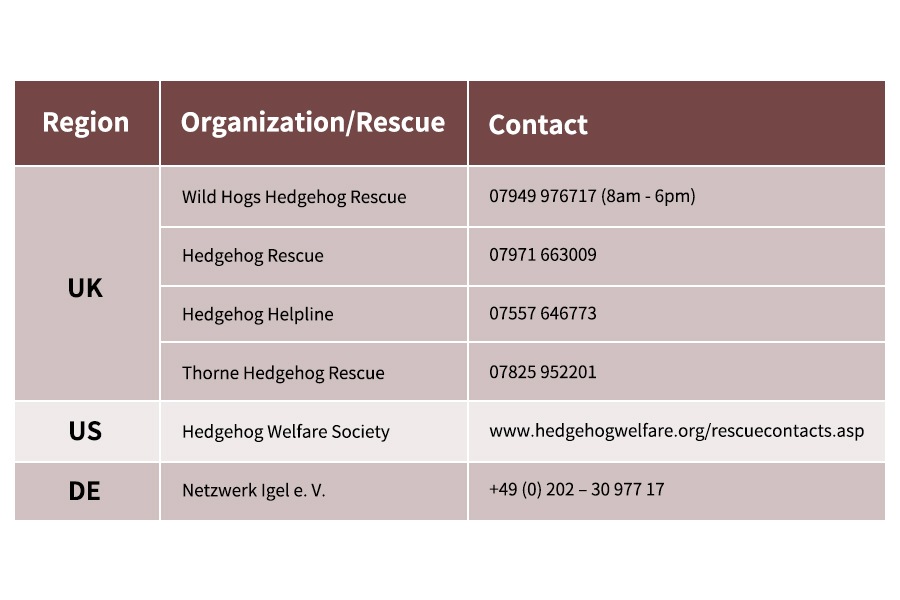
Tips: Always call first — most rescues rely on volunteers and aren’t staffed 24/7. If a rescue isn’t available locally, a 24‑hour emergency vet can also help until a rescue is reachable.
How Can You Help Hedgehogs All Winter?
Here are some simple ways to help:
- Leave untidy areas in your garden
- Avoid disturbing leaf piles
- Check bonfires before lighting
- Put out food during mild winter spells
- Keep gardens connected with small access gaps
