
Winter can be tough for our feathered friends. Birds need fresh water for drinking and bathing, but freezing temperatures can make access to water difficult or impossible. Fortunately, there are several natural, chemical-free ways to keep your bird bath from freezing.
Choosing the Right Bird Bath
First things first, you need to choose a bird bath for winter use.
- Material: Concrete and stone baths hold water longer than thin metal or plastic because they retain heat better. Ceramic can also work but may crack in extremely cold temperatures.
- Depth: Shallow baths freeze faster, so aim for a bowl that is at least 2-3 inches deep in the center. Birds prefer shallow edges to sip safely.
- Shape and Design: A wide, shallow basin exposes more water to cold air, so a slightly deeper bowl with sloping sides can slow freezing while still allowing birds to access water. Additionally, dark surfaces absorb sunlight, gently warming the water throughout the day.

Location Matters
Where you place your bird bath can significantly affect how long it stays ice-free. Here are some tips:
- Sunlight: Position the bath in a sunny spot. Even a few hours of direct sunlight can prevent freezing.
- Wind Protection: Wind accelerates freezing. Placing your bath near a natural windbreak, like shrubs or a fence, can help.
- Elevation: Consider using a stand or pedestal to elevate the bath slightly. This reduces heat loss from the cold ground.
7 Methods to Keep Bird Baths from Freezing
1.Use a Floating Object
A floating object, such as a small ball or a clean piece of wood, can help keep the water moving. As it moves with the breeze, it helps keep the water from sitting completely still, which slows down freezing.

2.Use Moving Water
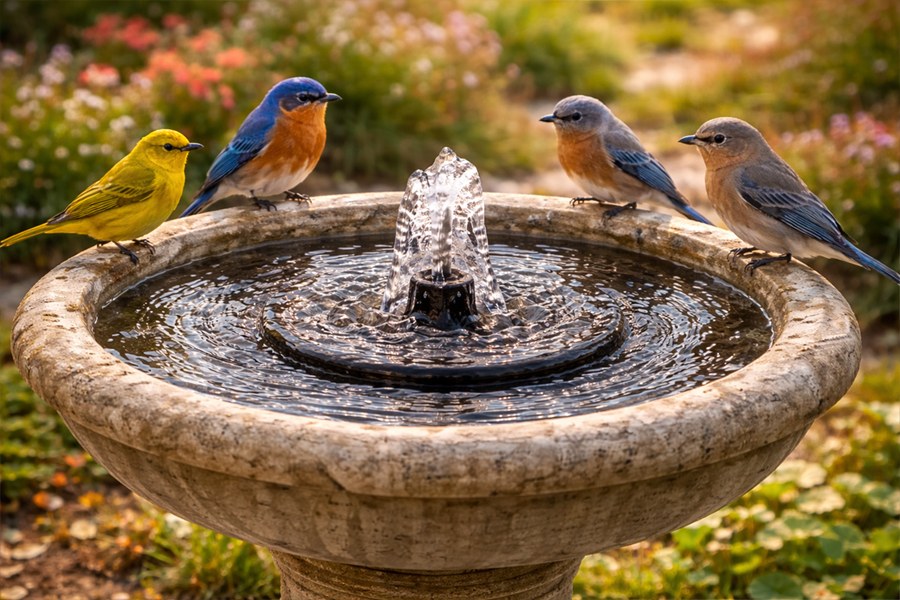
Birds are naturally attracted to moving water, and moving water is less likely to freeze than still water. Even a small ripple can make a big difference in winter. You do so by using a solar-powered fountain or a simple water dripper. If you don’t want to invest in a fountain, you can gently stir the water once or twice a day.
3.Add Warm Water Gradually
Instead of refilling with ice-cold water from the tap, use slightly warm water when topping up. Adding warm water raises the overall temperature of the bath and delays freezing. You don’t need to boil it; just use lukewarm water or slightly warmer.
Another tip is to change the water more frequently. Fresh water absorbs heat from the sun more efficiently than water that has been sitting frozen. Regularly refilling the bath keeps the water slightly warmer and reduces ice formation.
4.Use Natural Light and Shelter
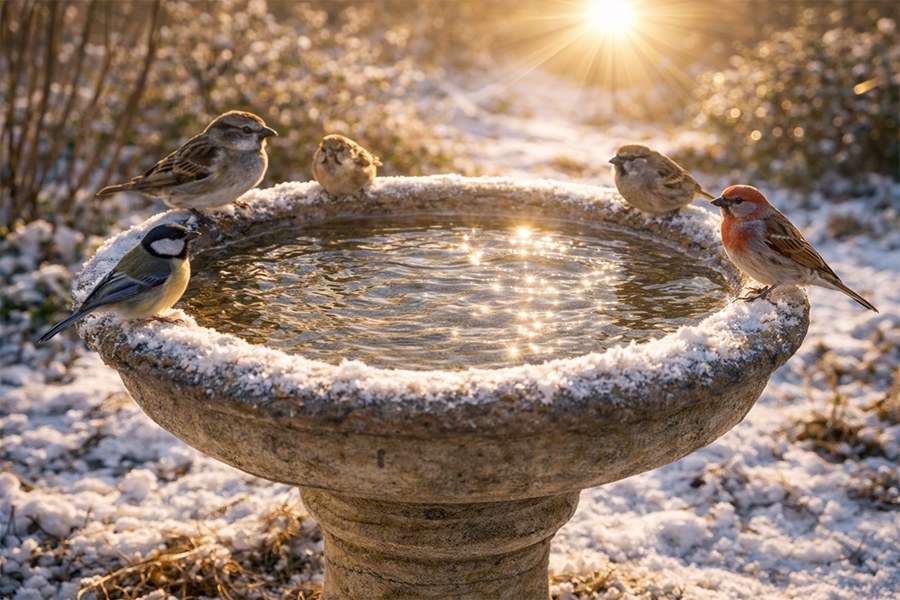
Place your bird bath where it will receive the most winter sunlight, preferably in a south-facing location. Direct sunlight can significantly slow down freezing, even on very cold days. Wind is another major factor in freezing. Strong winds accelerate heat loss, making water freeze faster. Position your bird bath near natural windbreaks, such as shrubs, hedges or trees.
5.Use Natural Heat Sources
Placing your bird bath near a south-facing wall can help, as well as absorb and radiate heat from the sun. Rocks placed around or under the bath can also store heat during the day and release it at night, slightly raising the water temperature. Even your landscaping choices matter. Dark mulch or stone surrounding the bath absorbs heat and helps maintain a slightly warmer microclimate, which can prevent ice from forming too quickly.
6.Clean Regularly
Keeping your bird bath clean is essential. Dirty water freezes faster because debris and algae can create thin ice layers more quickly. Regular cleaning ensures that birds always have safe, accessible water and helps the sun’s warmth reach the water more efficiently.

7.Insulate the Bird Bath
Natural insulation can help slow freezing. Placing the bird bath on a thick layer of straw, wood, or leaves can reduce the amount of cold seeping into the water from the ground. Surrounding the bath with natural materials like branches or brush can also help protect it from the wind, keeping the water slightly warmer for longer.
Bonus Tip: Add a Bird Box Camera
Installing a bird box camera or feeder camera is incredibly useful for monitoring your bird bath in winter. Most bird box cameras have infrared night vision, and you can:
- See when the water starts to freeze.
You can head out, break the ice and top up with warm water at the right moment.
- Know when birds are trying to drink but can’t.
If you see birds landing, pecking at ice or hopping away frustrated, it’s your cue to thaw the bath. This keeps your feathered friends hydrated and safe.
- Monitor early-morning conditions.
Freezing usually happens overnight. Most bird box cameras have infrared night vision, so you can check the bath at dawn.
- Spot snow, debris or blockages.
A heavy snowfall or falling leaves can cover a bird bath. The camera shows you instantly when it needs clearing.
- Understand when your specific birds use the bath.
Different species drink at different times. Once you know their patterns, you can time your refills to match peak activity.
You might be interested in…

WiFi Bird Box Camera
3MP resolution, 940nm infrared & daytime LEDs, motion detection, etc.

Long-Range WiFi Bird Box Camera
1080p Full HD, 64GB built-in SD card, a wireless range of up to 650ft, etc.

4K PoE Bird Box Camera
4K UHD videos, PoE range up to 328ft, IP66 waterproof, onvif-compatible, etc.

IP Bird Feeder Camera
1080p HD, 64GB built-in SD card, connect to the network via Wi-Fi or Ethernet, etc.
